Next step
Before you request installed-backup quotes
Your declared situation cannot be closed by a portable battery. That is a real answer, and this is the concrete next move: collect eight facts, then talk to installers. Nothing on this page is a paid referral, and nothing you entered is sent anywhere.
Published 8 August 2026 · Last reviewed 10 August 2026
By Alexis Marchais, engineer and independent decision-system builder.
How this guide calculates
This page performs no sizing of its own. It lists the inputs an installer needs so the arithmetic can be redone properly at whole-home scale.
Observed / model inputs
- Twelve months of utility kWh, your longest recorded outage, and the circuits that must stay on.
- Nameplate amps for well pumps, HVAC compressors and any 240 V motor, which size the inverter.
- Site-specific solar yield estimated for your location, plus roof orientation and shading.
Before the Battery planning assumptions
- The escalation trigger is Before the Battery's own rule: when required stored capacity exceeds what a portable class can deliver, or when daily recharge cannot close the cycle, the verdict becomes installed rather than larger.
- 85% AC delivery and a 10% retained reserve, giving the 0.765 planning factor, are conservative in-house assumptions used in that comparison.
- Nothing on this page is a paid referral, and no quote figures are estimated here.
The eight facts every installer will ask for
- The circuits that must stay on. Write them down by name — refrigerator, freezer, well pump, furnace blower, medical equipment, one lighting circuit — in priority order.
- Twelve months of utility bills. The kWh per month figures, not the dollar amounts. This sets the scale of everything else.
- Your longest realistic outage. Ask your utility for the outage history at your address, or use the longest one you remember.
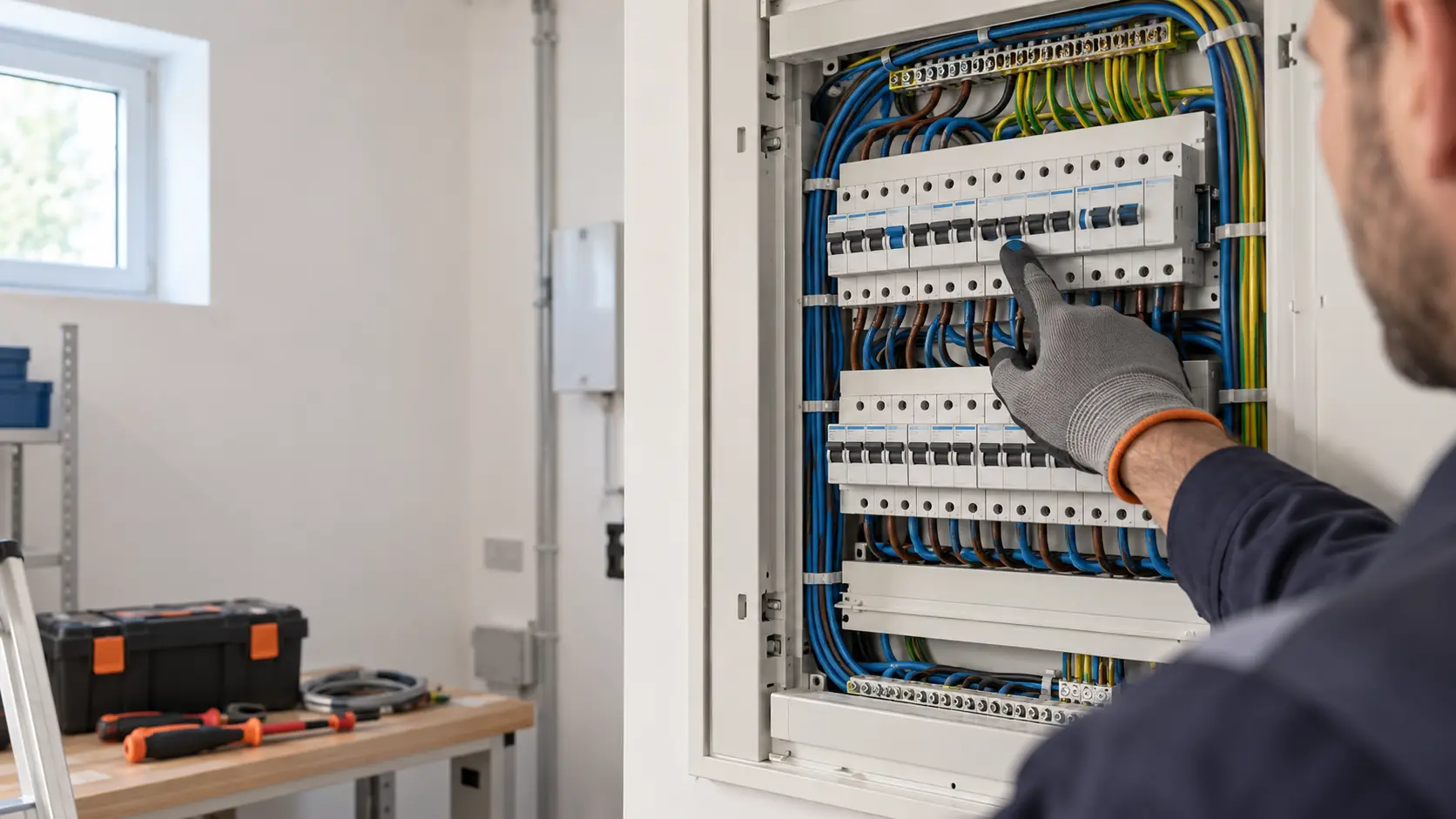
- Main panel details. Service size in amps (usually on the main breaker), panel brand, and a photo of the panel with the cover on and the directory legible.
- Whether you need whole-home or a critical-loads subpanel. The subpanel option is usually far cheaper and is often the right answer.
- Starting loads. Well pump, HVAC compressor and any 240 V motor — nameplate amps from the equipment labels. These size the inverter, not the battery.
- Recharge source. Existing or planned solar, roof orientation and shading, or a generator inlet. A battery with no recharge path is a large UPS.
- Site and code constraints. Where the equipment can be mounted, indoor or outdoor, distance to the panel, and whether your jurisdiction or utility requires an interconnection application.
Questions to ask each installer
- Which specific circuits will be backed up, and for how many hours at my declared load?
- What is the continuous and surge output of the inverter you are proposing?
- Is the transfer automatic, and how long is the transfer gap?
- What recharges it during a multi-day outage, and at what rate per day?
- What is quoted separately: permits, interconnection, the subpanel, and the electrical work?
- What is the warranty on the battery, the inverter and the installation labour?
Get at least three quotes
Bring the same eight facts to each one and compare the answers, not the brands. If two installers size the same house very differently, ask both to show the arithmetic — the same discipline this site applies to portable units.
Before you go
It is worth re-running the check with a shorter planning duration or a smaller critical load: sometimes a portable unit covers a realistic 24-hour outage even when it cannot cover 72 hours. Re-run the refrigerator check, or read the methodology.
Reproducible dataset
Before requesting quotes, it helps to know the point at which storage stops being the answer. The research table shows exactly where the recharge gate opens under a zero-recharge baseline.
Refrigerator outage sizing table: 15 transparent scenarios — formula, assumptions, gate states, XLSX and CSV.
Primary sources
Merchant marketing is never used as a primary source for generic arithmetic. Specific product or model specifications still require dated OEM documentation plus independent measured evidence.
- Homeowner's Guide to Going SolarUS Department of Energy
Supports: The general expectations for a permanently installed solar-and-storage system versus portable equipment.
- Guide to Fire Safety for Solar SystemsUS Department of Energy
Supports: That installed backup equipment carries permitting, siting and fire-safety requirements handled by a qualified installer.
- PVWatts CalculatorUS National Renewable Energy Laboratory
Supports: That realistic daily solar yield is location- and season-dependent, and must be estimated rather than assumed from panel nameplate watts.
Browse all guides, diagnostics and research — every guide, diagnostic and research asset published here.